




If you are asking how much it costs to travel in Turkey, the most important thing to understand is that the country is not uniformly cheap or expensive. Local transport and everyday food can feel manageable, while major attractions, private tours, and multi-stop itineraries can raise the budget much faster. A good Turkey budget guide should therefore focus on what actually drives your spending, not just throw out one fake average daily cost. The official data and pricing pages support exactly that more practical approach.
Is Turkey Expensive to Travel?
Turkey is not uniformly cheap or expensive. A national average of visitor spending describes a past group of travelers; it is neither a hotel-room price nor a reliable quote for your own daily budget. Price your dates and chosen route instead.
Everyday transport and major attractions belong to different budget categories. Compare the current local fare table with the ticket prices of the museums you actually plan to enter, and include accommodation, meals, and transfers separately.
The Biggest Things That Change Your Budget
In practice, four things shape your Turkey budget most: accommodation style, number of internal transfers, paid attractions, and how many special dining or tour experiences you add. This is an editorial conclusion, but it is strongly grounded in the official spending structure showing that package tours, food and beverage, and international transport take major shares of tourism expenditure, alongside the live pricing gap between everyday local transit and museum access.
That means two travelers in Turkey can have very different costs even on the same route. A simple public-transport trip with a few paid sights can stay far below a private, attraction-heavy itinerary with domestic flights and curated experiences. This is an inference from the official benchmark and price points above.
Budget by Travel Style
For a budget-conscious trip, simplify the route, compare public transport, select paid attractions carefully, and look at actual accommodation and meal prices. Do not set your target solely below an old national spending average.
For a mid-range trip, build a dated estimate for your hotels, meals, intercity travel, and selected visits. An average tourism statistic does not establish a dependable mid-range price band for every destination or season.
For a higher-end trip, costs rise quickly once you add private transfers, luxury hotels, resort stays, a dense museum schedule, or multi-city domestic transport. Official museum and transport pricing already shows how fast the gap opens between simple local days and more curated travel days.
How Much Does Food Cost in Turkey?
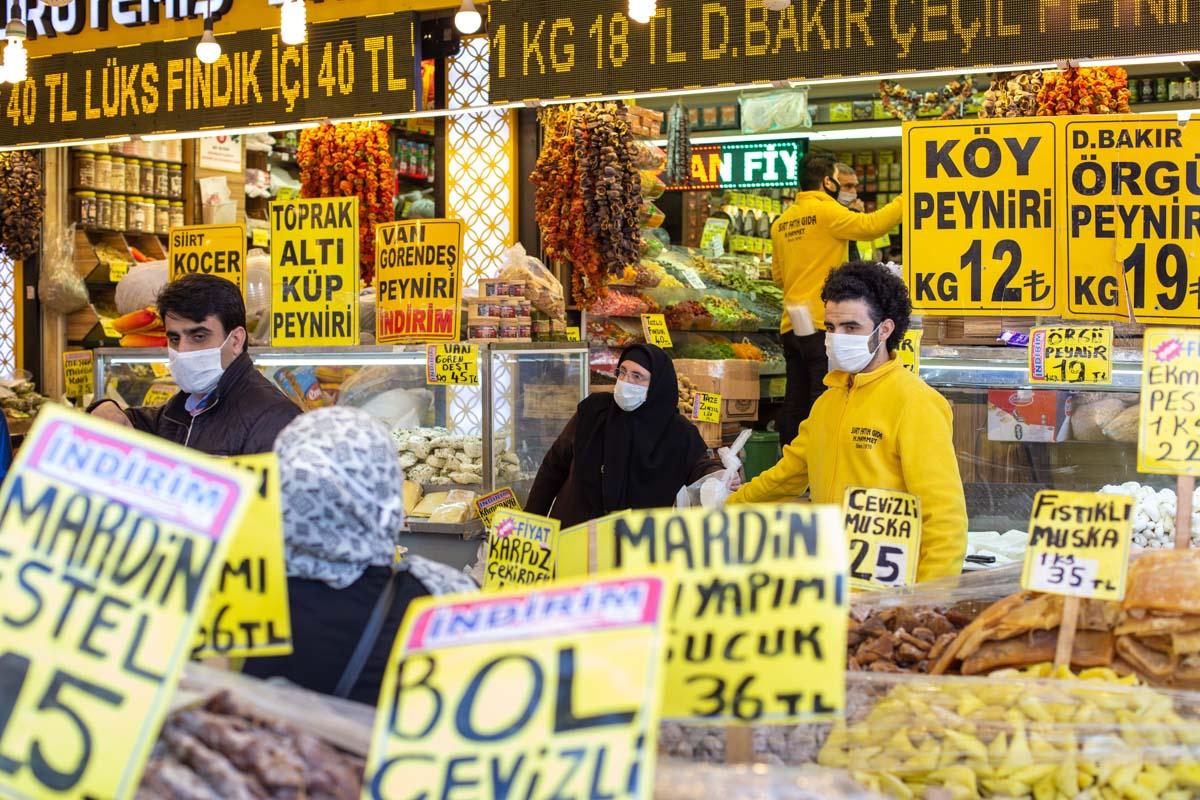
Food can be one of the easier parts of the budget to manage. TUIK's 2025 tourism statistics say food and beverage spending accounted for 21.1% of tourism expenditure, which is significant but still smaller than the combined pressure of total trip structure.
What matters more than Turkey is cheap for food is how you eat. A travel day built around breakfast, street food, lokantas, and simpler local meals will usually stay much lighter than a trip built around rooftop dining, Michelin-level restaurants, or nightly seafood-and-wine dinners. That is an editorial conclusion, but it is consistent with the official spending shares and the broader gastronomy structure of Turkish travel.
How Much Does Transport Cost in Turkey?
As checked on 13 September 2026, Metro Istanbul lists a full-fare anonymous Istanbulcard journey at 46.20 TRY and a single-use electronic ticket at 65 TRY. These are examples for that published tariff, not universal prices for every Istanbul transport service; recheck before travel.
Intercity transport is where the budget changes more dramatically. Turkiye's official train operator emphasizes that high-speed trains are designed to be a faster and more economical option than road travel, but route choices, domestic flights, buses, and the number of city changes can still make total transport spend vary widely. That second sentence is an editorial planning point based on the official transport framing and the broader reality of route complexity.
Are Attractions Expensive in Turkey?
At the 13 September 2026 check, the official MuseumPass Turkiye page lists EUR 165 and 15 days from first use at participating sites. Check the exact included sites, one-entry rules, and restrictions; the pass does not cover every attraction or night-museum session.
That does not mean every traveler needs the pass. It means that if your trip is heavily built around archaeology, palaces, and museums, attractions may become one of your biggest budget lines. By contrast, travelers focusing more on neighborhoods, beaches, ferry rides, nature, and food can spend much less on entry fees. This is an editorial recommendation based on the official museum-pass pricing and the difference between paid and non-ticketed travel styles.
What Usually Makes a Turkey Trip More Expensive?
A Turkey trip usually gets more expensive when you do three things at once: move around a lot, pay for lots of major sights, and choose higher-comfort transport or dining. That pattern is not stated as a single official sentence anywhere, but it is the most practical reading of the current official benchmark data, museum pricing, and local transport fares.
In simpler terms, a slow Istanbul-focused trip can be much cheaper than a fast Istanbul + Cappadocia + Antalya + western archaeology route, even if the total trip length is the same. The more blocks you add, the more your cost shifts from living in Turkey to moving through Turkey. This is an editorial planning conclusion.
How to Keep Costs Under Control
The easiest way to control spending is to simplify the route. Fewer internal moves usually means fewer transport costs and fewer transition days that lead to extra airport, station, taxi, or convenience spending. That is an editorial recommendation grounded in the official short-stay block logic and cost differences above.
The second best move is to decide early whether your trip is attraction-heavy or experience-heavy. If you want museums and archaeological sites every day, budget for that honestly. If you want ferries, food, neighborhoods, beaches, and scenic time, the overall daily cost usually stays softer. This is an editorial recommendation based on the official museum-pass pricing and the much lower cost of everyday public transport.
Final Recommendation
Turkey can offer good value, but the right budget comes from your own itinerary. List accommodation, meals, local and intercity transport, admissions, and selected experiences for your dates. A historical national average is not a promised daily cost or a hotel price.
For a useful budget:
- request current prices for your dates and party size
- include baggage, airport transfers, and local transport
- check attraction inclusions and leave room for optional spending
Check Metro Istanbul fares and the official MuseumPass Turkiye conditions for current examples. Choose your travel style first, then price the route. Figures in this article are not a HiTrip package quote.
Related reads: First-Time Turkey Travel Guide, How Many Days Should You Stay in Turkey?, When to Visit Turkey?, and Turkey Tours Comparison Guide.


