




Contents
- 1. Turkish Cuisine Is Regional Before Anything Else
- 2. Start with Turkish Breakfast
- 3. Bread Is Not a Side Note
- 4. Meze Is One of the Core Dining Experiences
- 5. Kebabs Matter, but They Are Only One Part of the Story
- 6. Lokanta Food Shows the Everyday Side of the Cuisine
- 7. Seafood Is Essential, Especially in Coastal Food Culture
- 8. Desserts Are a Major Part of the Identity
- 9. Tea Is Daily Culture, Not Just a Drink
- 10. Turkish Coffee Is One of the Strongest Cultural Symbols
- 11. Turkish Cuisine Is Also About Method and Philosophy
- How to Approach Turkish Cuisine on a First Trip
- Final Recommendation
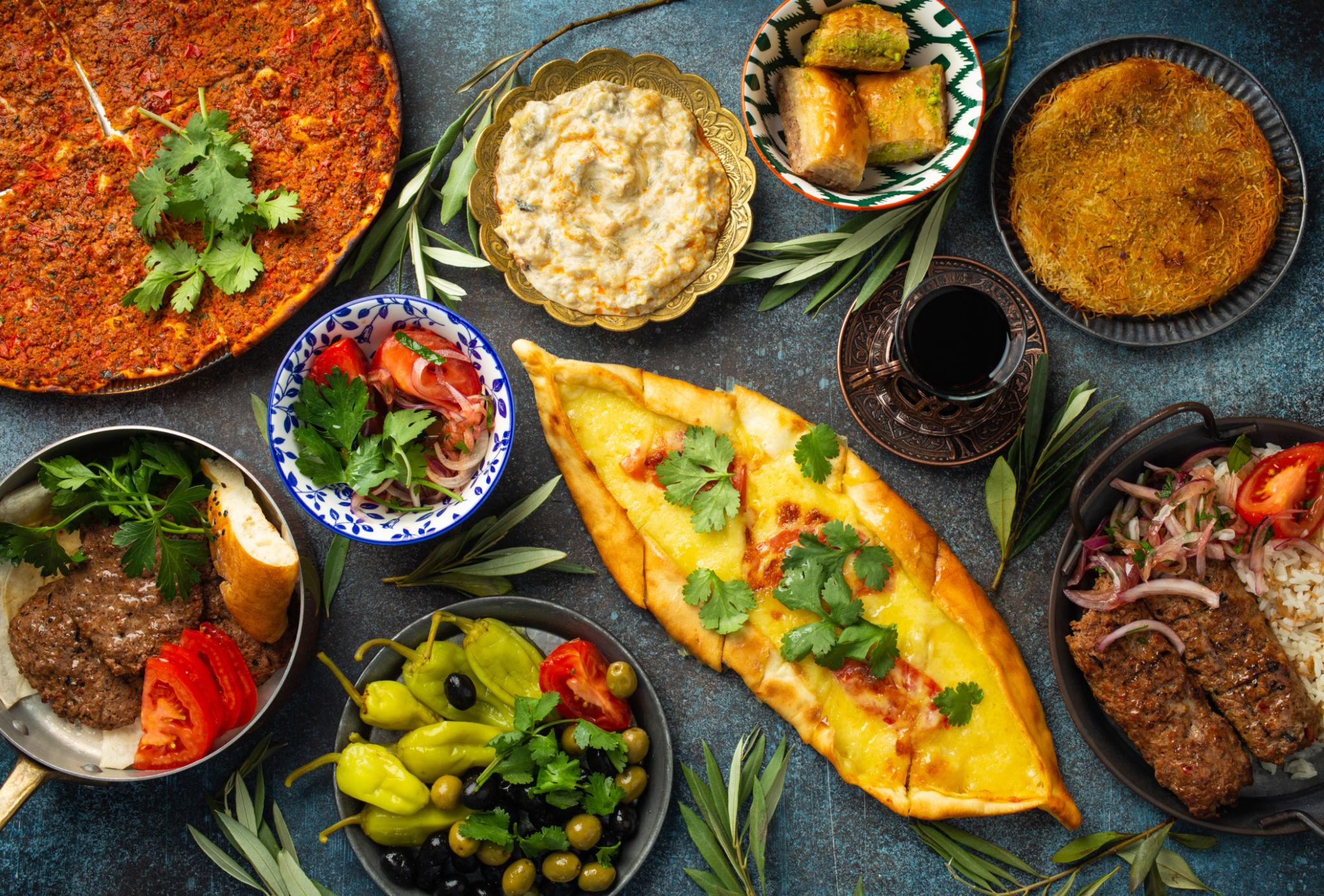
If you want to understand Turkish cuisine properly, do not look for one national plate that explains everything. Turkiye's official gastronomy platform presents the cuisine through regional produce, family traditions, cooking methods, and everyday rituals, showing that Turkish food is not one single style but a large culinary system shaped by geography and culture.
That is why this guide is built around food culture as much as dishes. It is not a first-timer checklist article. A good Turkish cuisine guide should explain breakfast, meze, kebabs, home-style meals, desserts, breads, tea, and coffee while also showing how the country's regions shape what ends up on the table.
1. Turkish Cuisine Is Regional Before Anything Else
One of the most important things to know is that Turkish cuisine is deeply regional. The official GoTurkiye gastronomy platform says Turkiye is divided into seven main regions, each with its own climate, produce, culinary choices, and traditions.
That means Turkish food is not a narrow category. A useful guide should always leave room for local variation, because what you eat on the Aegean coast, in Central Anatolia, in Istanbul, or in Southeastern Anatolia can feel quite different while still belonging to the same broader cuisine. That conclusion is editorial, but it follows directly from the official regional framing.
2. Start with Turkish Breakfast
A real Turkish breakfast is one of the clearest introductions to the cuisine. GoTurkiye describes it as a shared and social meal built around many small sweet and savory plates, bread, and tea, and notes that a typical spread includes cheeses, olives, jams, vegetables, and egg dishes. Another official breakfast page adds that serpme kahvalti is defined by abundance and variety rather than by a single item.
For first-time visitors, breakfast is the best place to begin because it immediately shows how Turkish cuisine values generosity, table culture, and balance. It is less about one iconic recipe and more about the way many small things come together. That is an editorial recommendation based on the official breakfast framing.
3. Bread Is Not a Side Note
Bread is central to Turkish food culture. UNESCO's listing for the flatbread-making and sharing culture of lavash, katyrma, jupka, and yufka says that bread-making and bread-sharing carry important social functions and remain widely practiced traditions.
That matters because Turkish cuisine is not only about main dishes. Bread is part of hospitality, family meals, preparation rituals, and everyday eating. In practice, that makes breads and flatbreads one of the foundations of the cuisine, not just an accompaniment. That is an editorial conclusion based on UNESCO's social and cultural framing.
4. Meze Is One of the Core Dining Experiences
Meze is one of the most important shared-eating traditions in Turkish cuisine. GoTurkiye's gastronomy content explains that mezes are usually served cold, often built around yoghurt, olive oil, vegetables, or seafood, and hold a central place at raki tables. Another official page says mezes are a key part of long meyhane-style meals with friends.
This makes meze one of the best ways to understand Turkish dining culture. It turns a meal into a sequence of shared tastes rather than one main plate, which is why it feels so different from more individual restaurant styles. That is an editorial recommendation based on the official meze and meyhane framing.
5. Kebabs Matter, but They Are Only One Part of the Story
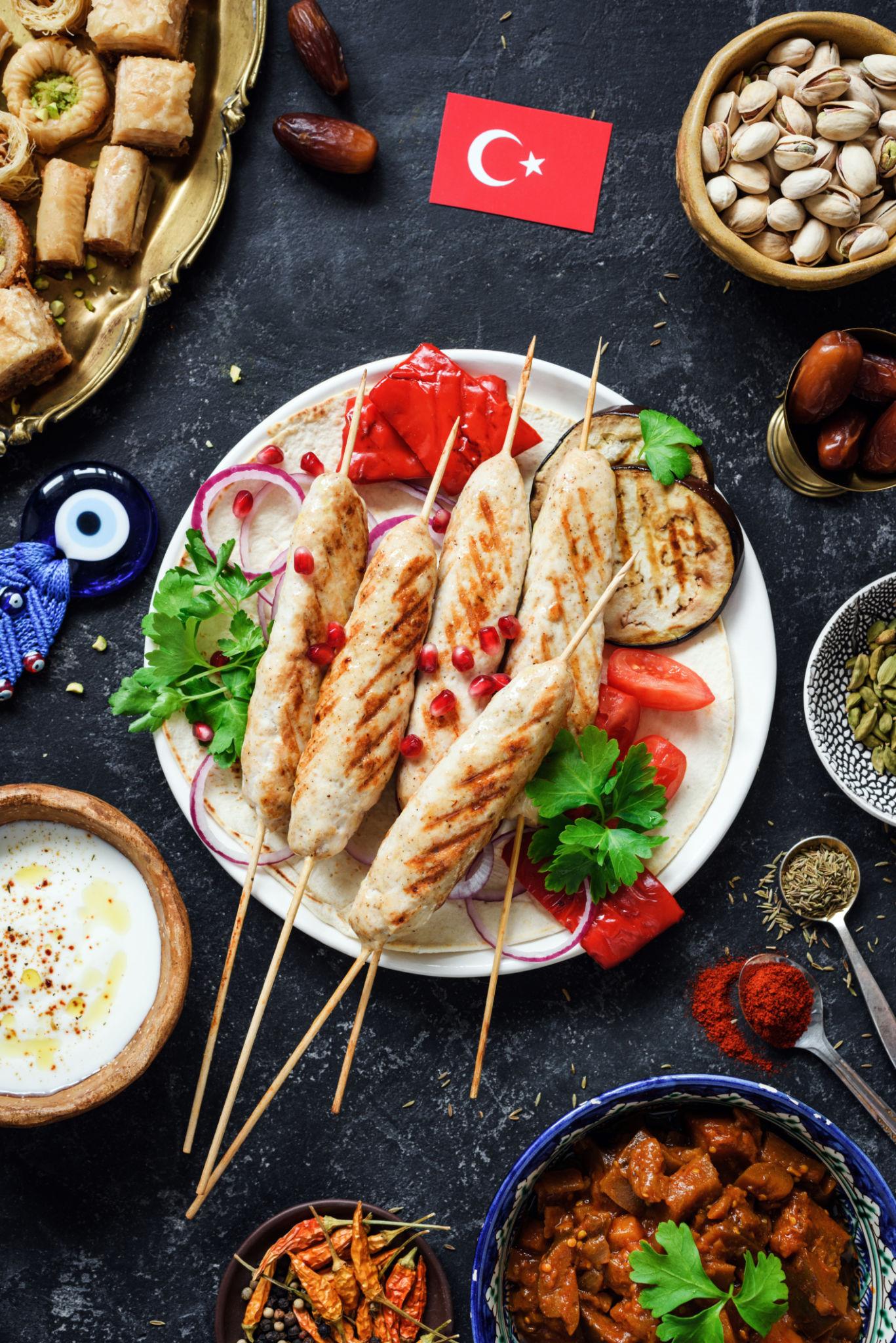
Kebabs are undeniably important in Turkish cuisine. GoTurkiye's kebab guide says kebab restaurants across Turkiye offer a wide range of styles and notes that the most common type is marinated meat cooked on a skewer, with many regional and preparation differences. Southeastern Anatolia's official gastronomy page also presents the region as a homeland of kebabs.
But a good Turkish cuisine guide should not reduce the whole country to kebabs. Kebabs are a major pillar, especially in meat-forward regional traditions, yet they sit alongside breakfast culture, meze, seafood, soups, vegetable dishes, and lokanta cooking. That is an editorial recommendation based on the official diversity shown across the gastronomy sources.
6. Lokanta Food Shows the Everyday Side of the Cuisine
If kebabs show one famous face of Turkish cuisine, lokanta meals show another: everyday home-style cooking. Official Istanbul gastronomy content describes lokantas as places serving rustic, hearty dishes with a homemade feel, including casseroles, vegetables, olive-oil dishes, stuffed vegetables, and tray-based daily meals.
This is important because the cuisine is not only festival food or restaurant-specialty food. A lot of Turkish food culture lives in practical daytime meals that feel close to home cooking. That is an editorial conclusion based on the official lokanta-style descriptions.
7. Seafood Is Essential, Especially in Coastal Food Culture
Official GoTurkiye gastronomy pages describe Istanbul as the gastronomic capital of a country surrounded by three seas and highlight bluefish, anchovies, bonito, turbot, and other seafood specialties as major parts of the dining scene.
That matters for a national guide because it reminds readers that Turkish cuisine is not only inland and meat-based. Coastal and strait-based eating traditions are also central, especially in places with strong fishing and maritime food cultures. That is an editorial recommendation supported by the official seafood emphasis.
8. Desserts Are a Major Part of the Identity
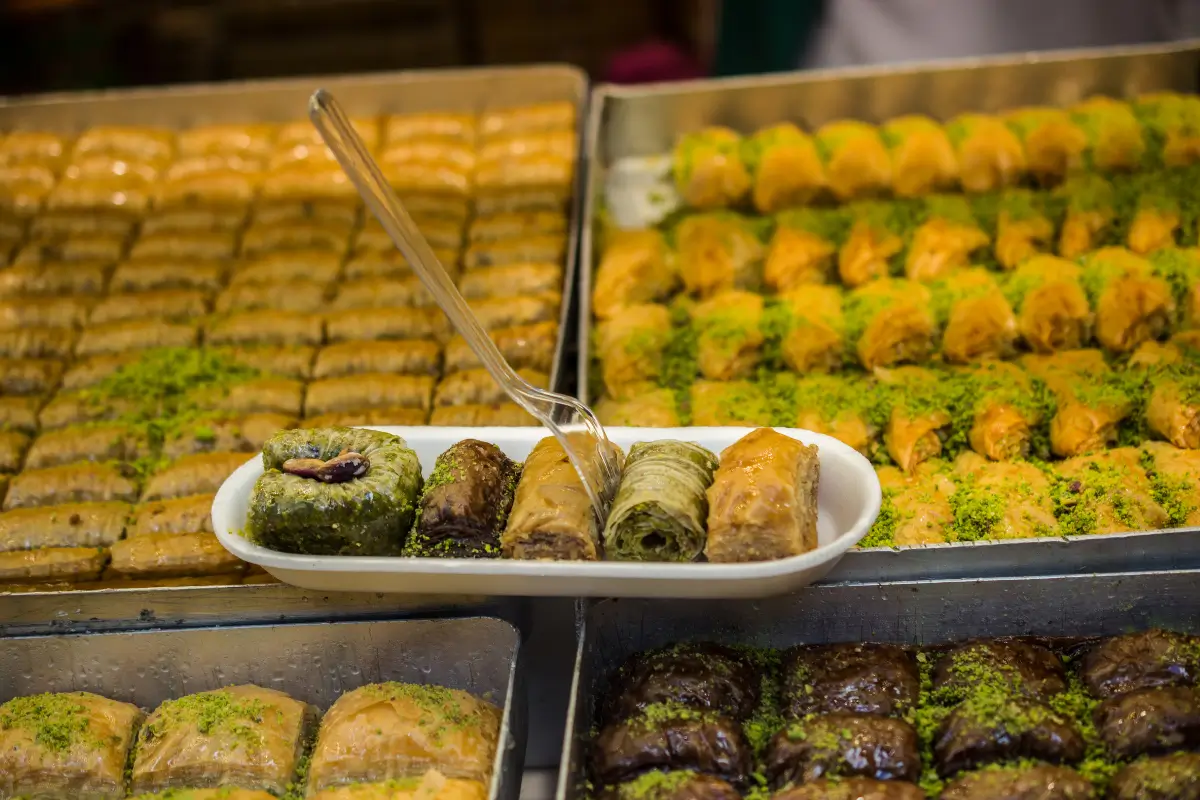
Desserts matter enormously in Turkish cuisine, and baklava is one of the most visible examples. GoTurkiye's Southeastern Anatolia gastronomy page explicitly describes the region as the homeland of both kebabs and baklava, underscoring how central the dessert is to Turkish culinary identity.
A good Turkish food guide should therefore treat sweets as part of the main story, not a small afterthought. In the Turkish context, dessert often carries regional pride and craftsmanship just as clearly as savory food does. That is an editorial conclusion based on the official regional emphasis on baklava.
9. Tea Is Daily Culture, Not Just a Drink
Tea is one of the strongest everyday rituals in Turkiye. GoTurkiye's tea-culture page says nine out of ten Turks drink tea every day, and its drinks guide notes that tea is constantly offered to guests throughout the day and after meals.
This means tea belongs in a Turkish cuisine guide as a cultural habit, not only as a beverage category. It shapes hospitality, pauses, conversation, and the rhythm of eating in a very direct way. That is an editorial recommendation based on the official tea-culture framing.
10. Turkish Coffee Is One of the Strongest Cultural Symbols
Turkish coffee is not just famous; it is internationally recognized as cultural heritage. UNESCO says Turkish coffee culture and tradition is part of social life, ceremonial occasions, and informal knowledge transfer within families, and that it is inseparable from a rich communal culture.
That makes Turkish coffee one of the most important food experiences in the country. It represents hospitality, ritual, conversation, and memory, which is why it belongs in any serious Turkish cuisine guide even though it is not a meal by itself. That is an editorial conclusion based on UNESCO's description.
11. Turkish Cuisine Is Also About Method and Philosophy
GoTurkiye's official Turkish cuisine page says the cuisine has three essential features: it is traditional, healthy, and zero-waste in character. The same source emphasizes recipes passed from generation to generation and cooking methods designed to preserve the intended result of the dish.
This is one of the most useful big-picture ideas in the whole guide. Turkish cuisine is not only a collection of dishes; it is also a way of cooking, sharing, and preserving ingredients and traditions. That is an editorial conclusion, but it comes directly from the official definition of the cuisine.
How to Approach Turkish Cuisine on a First Trip
For most first-time visitors, the strongest approach is to experience the cuisine in layers: begin with a full Turkish breakfast, notice bread and simit culture, add one meze-based meal, include a lokanta lunch, try a regional kebab, and finish with dessert, tea, and Turkish coffee. That sequence is less about chasing a checklist and more about seeing different parts of the food system.
A good first introduction should show range rather than just chasing the most famous meat dish.
Final Recommendation
If you want the simplest possible summary, here it is: treat Turkish cuisine as a system, not a single plate. Start with breakfast and bread, understand meze and lokanta culture, enjoy kebabs without reducing the cuisine to them, and pay attention to desserts, tea, coffee, and regional variation.
The best way to understand Turkish cuisine in 2026 is to see it as a broad cultural system shaped by regions, traditions, hospitality, and shared eating. Official sources consistently show that the cuisine is much bigger than kebabs or one famous dessert: it is breakfast, bread, meze, lokanta meals, seafood, tea, coffee, and inherited culinary memory all at once. If you want the shorter first-timer food shortlist, pair this guide with Must-Try Foods in Turkey.
Related reads: What to Eat in Istanbul?, Best Food Experiences in Istanbul, Must-Try Foods in Turkey, and Istanbul Street Food Guide.


